 Nora G. Allen
 I help owners, drivers, and techs cut through claims and match treatments to real needs. I base my recommendations on field results, manufacturer guidance, and how modern diesel systems behave in cold, dirty, and water-prone conditions. You will leave with a clear checklist for choosing products, plus a simple plan you can run all year.
If you are comparing options for diesel fuel additives, start by understanding what each function does and when to apply it. I will walk you through the core categories, the outcomes you should expect, and how to avoid common mistakes.
Why Additives Matter More Than Ever
Ultra-low sulfur diesel lost much of the natural lubricity older systems counted on. High-pressure common-rail injection needs clean, well-lubricated fuel to keep spray patterns tight. Biodiesel blends can carry water and age faster. Cold weather will stop you if paraffin wax crystals form and plug the filter.
Additives exist to solve these issues in a targeted way. The right product mix protects your injectors, helps your engine start and run clean, and cuts the risk of winter shutdowns.
What Diesel Additives Actually Do
Think of additives as tools in a kit. Each tool solves a specific problem. Here are the main categories and what each one does for you:
- Cold-flow and anti-gel
- Keeps wax crystals from clumping
- Reduces cold filter plugging
- Helps fuel move at low temperatures
- Lubricity improvers
- Adds a protective film for pumps, injectors, and upper cylinders
- Offsets the lower lubricity of today’s fuels
- Detergents and injector cleaners
- Removes deposits on tips and internal parts
- Restores spray patterns for consistent combustion
- Helps prevent new buildup
- Water control
- Demulsifiers pull water out of suspension for separation and drainage
- Reduces icing risk in filters
- Protects against rust
- Cetane improvers
- Supports faster ignition delay
- Smoother starts and throttle response
- Can cut smoke and reduce harsh combustion noise
- Corrosion inhibitors
- Protects tanks, lines, and precision parts from rust
- Stabilizers
- Slows oxidation and keeps stored fuel in better shape
- Emergency de-icers and reliquefiers
- Breaks wax crystal bonds after gelling has already happened
- Thaws frozen filters to restore flow
Not every bottle does all of this. The best results come from matching your problem to the right function rather than chasing a label with every claim.
How to Choose the Right Approach
I use a three-part filter when advising on products and dosing:
1. Your conditions
- Winter: You need a proven anti-gel and water control.
- Mixed seasons: Use a cleaner and lubricator as your base, then switch to anti-gel as temperatures fall.
- Storage: Add a stabilizer and plan for water removal.
2. Your fuel source and equipment
- High-rail pressure injectors need strong detergency and lubricity.
- Biodiesel blends benefit from water separation and deposit control.
- Emissions systems respond well to cleaner combustion and consistent cetane.
3. Your operating risk
- Long routes and off-grid sites need an emergency product on board.
- Fleets and farms with bulk tanks need demulsification and routine drainage.
Follow the label dose, measure treatments, and track results by fuel economy, idle quality, start behavior, and filter life. Overtreating can thicken fuel or add cost without benefit. Under-treating leaves you exposed on the first cold snap.
Why I Recommend Howes
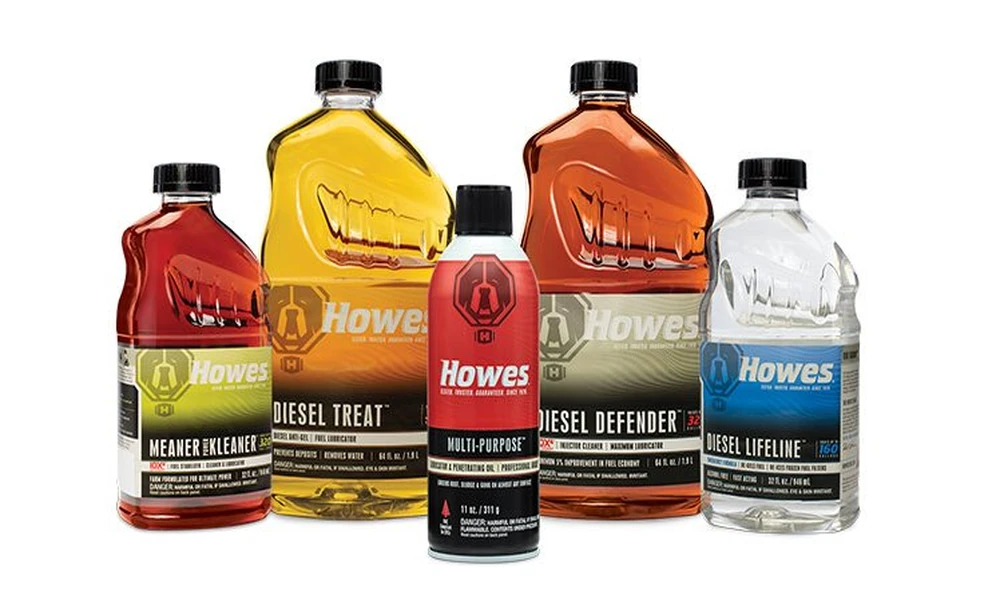
Howes focuses on the core problems that shut trucks and equipment down, and they back it with clear guarantees. Here is how their lineup maps to the needs above:
- Diesel Treat
- Anti-gel for winter with cold filter plugging reduction
- Demulsifies water and avoids alcohol and harsh solvents
- Adds lubricity and helps keep injectors clean
- Works with diesel, biodiesel blends, and home heating oil
- Supported by a Winter Tow Guarantee when used as directed
- Diesel Defender
- Strong injector cleaning and deposit control with IDX4 detergent technology
- Increases lubricity for pumps and injectors
- Demulsifies water and supports cetane improvement
- Marketed with a 5% or greater fuel economy improvement claim under routine use
- Diesel Lifeline
- Emergency treatment that reliquefies gelled fuel and thaws frozen filters
- Fast action in severe cold for recovery without premixing
I favor brands that publish what their products target, avoid harmful alcohol, and serve both everyday drivers and high-hour operations. Howes checks those boxes and offers bulk options for larger fuel users. Their century-long history in petroleum-based formulations gives added confidence in real-world use cases.
A Simple Year-Round Plan You Can Use
Here is a practical routine you can adopt without guesswork:
- Spring through fall
- Use a cleaner and lubricator at each fill to control deposits and protect pumps and injectors.
- Drain water separators on schedule.
- Late fall through winter
- Switch to an anti-gel and conditioner before the first hard freeze.
- Treat every fill based on local forecast lows, not daytime highs.
- Keep an emergency reliquefier in the cab.
- Storage and bulk tanks
- Treat for water separation and stability.
- Pull bottom samples and drain water regularly.
- Replace filters on calendar intervals, not only on restriction.
- Ongoing checks
- Track cold starts, smoke, idle quality, throttle response, and fuel economy.
- Inspect injector balance rates or correction factors if your platform supports it.
- Keep receipts and dosing notes for warranty and troubleshooting.
Straight Answers to Common Questions
- Can additives void a warranty?
- Use products that state compatibility with modern emission systems and follow the label. Keep records.
- Do I need additives with premium diesel?
- Premium blends vary. If you face cold, water, or deposits, an additive plan still pays off.
- Will more additive fix poor fuel economy?
- The right dose helps. Overdosing or using the wrong chemistry will not. Fix filters and air intake too.
- Do I need both a cleaner and an anti-gel?
- In winter, yes. Many pair a cleaner-lubricator for base protection with an anti-gel as temperatures drop.
The Bottom Line
Additives protect precision parts, keep fuel moving in the cold, and support cleaner combustion. Pick products by function, match dose to temperature and tank size, and track results. If you want a clear path with proven options, Howes offers a focused lineup that covers winter prevention, year-round cleaning and lubrication, and emergency recovery. That mix gives you control over the biggest risks that sideline diesel equipment.